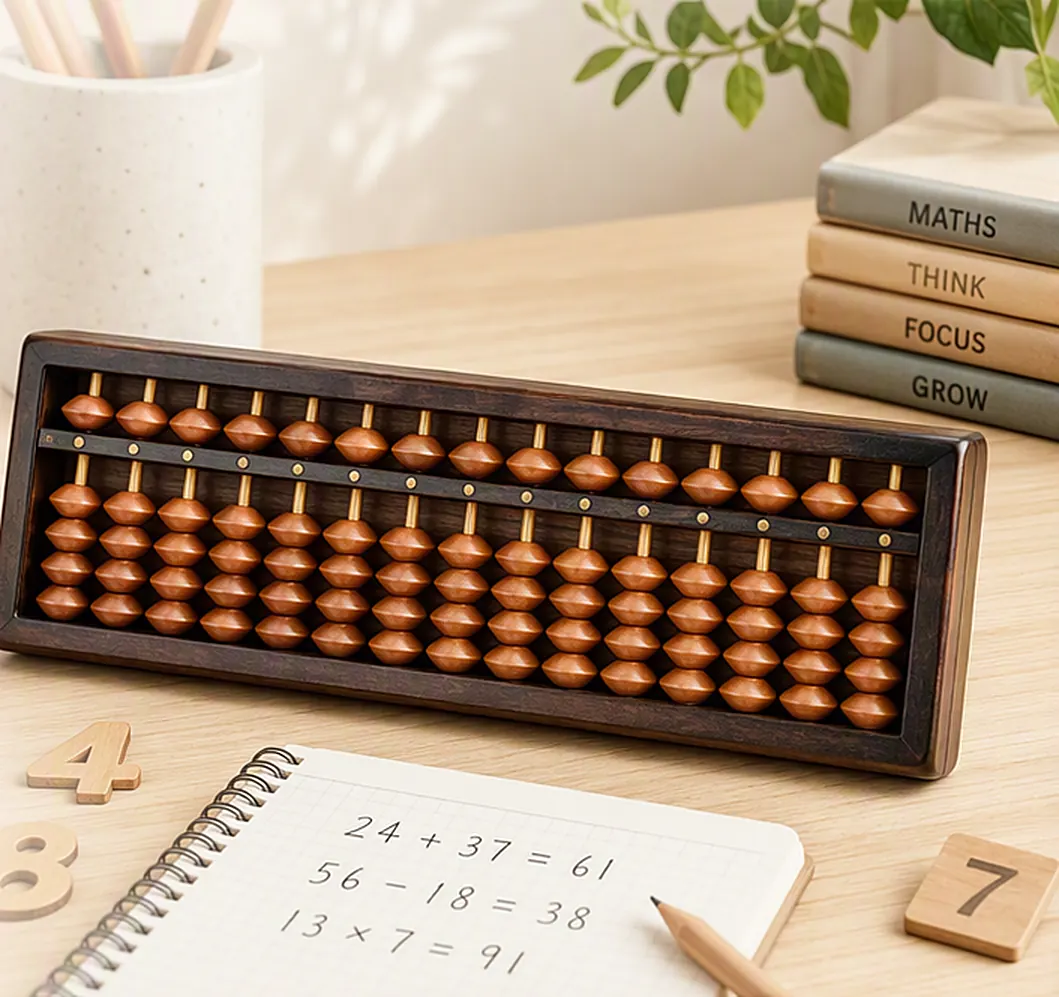
Free abacus guide for families
Learn what the abacus is, how it works, and whether it suits your child
The abacus is a frame of beads used for arithmetic. In India it's mostly taught to children aged about 5 to 12. This site explains how it works and what research says, and gives you free tools to practise at home.
- Free guides
- On-screen abacus
- Printable worksheets
- Practice games
- English · हिन्दी
Practise right here
Practice abacus
Move beads, show any number up to 99 lakh, and add or subtract to see how the rods change.
Open the abacus →GAMESet the number
Ten rounds. A number appears and you set the beads to match it.
Play →PRINTABLEWorksheets
Make a fresh sheet for Levels 1 to 5, with a name line and an answer key.
Make a worksheet →NEWAbacus Practice Game 2026
Ten mixed questions at three levels, with instant feedback and a review at the end.
Start the game →For parents
You can be your child's abacus guide
You know your child best: what keeps them interested, when they are tired and how they learn. With clear explanations and the right practice, you can teach the early abacus levels yourself, guide your child step by step and spend good time learning together.
- Learn a step ahead. Each guide explains one idea at a time, in plain words.
- Show, then let them try. Use the on-screen abacus and the guided sums together.
- Practise little and often. Practice by operation, quick sums, worksheets and the Practice Game.
- Follow one path. The step-by-step guidance shows what to teach first and what comes next.
- Understand the abacus
- Numbers
- + and −
- × and ÷
- Practise and move up
Your learning journey
0% explored
AbacusBrainy is free. We share learning resources and guidance; we don't sell courses or classes. A class or a teacher is a good option too if you want one, but you don't need one to begin.
Our approach
- Everything here is free: the guides, the practice tools, the worksheets and the games. There's no sign-up and nothing to buy.
- We explain the method step by step, with worked examples you can try on the abacus below, so parents can practise alongside their children.
- When we mention research, we say what was studied, how many children took part and what wasn't found.
- We don't sell classes or kits and we don't take payment from abacus brands.
Where to start
What an abacus is
The parts of a soroban, the main types, and a short history from Mesopotamia to modern India.
Read: what is an abacusHow it works
Place value on rods, bead values, and the small-friend and big-friend rules used for adding and subtracting.
Read: how the abacus worksBenefits and limits
What abacus practice can support, what's often claimed, and what the two main school trials found.
Read: benefits of abacusPractise with your child
The right age, signs of readiness, a four-week home plan, and when to take a break.
Read: the parent's guide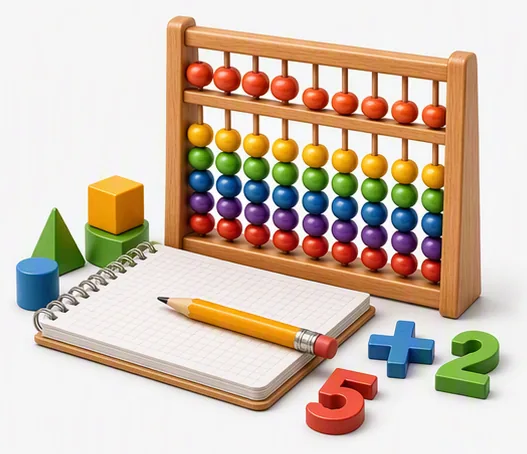
Quick facts
| Common type in India | Japanese-style soroban: 1 bead above the beam, 4 below |
|---|---|
| Typical starting age | About 5 to 7 years, once a child can count to 20 and sit for 15–20 minutes |
| Time to the mental levels | Usually 2 to 4 years of regular practice |
| Practice at home | Short daily sessions (10–15 minutes) tend to work better than long weekly ones |
| What it builds | Fast, accurate arithmetic and, later, mental calculation using a pictured abacus (often called anzan) |
Deciding how to start? These four pages answer the questions parents ask most: the right age to start, how long it takes, a class or learning at home, and what affects class fees.
For parents
Small hands, big numbers
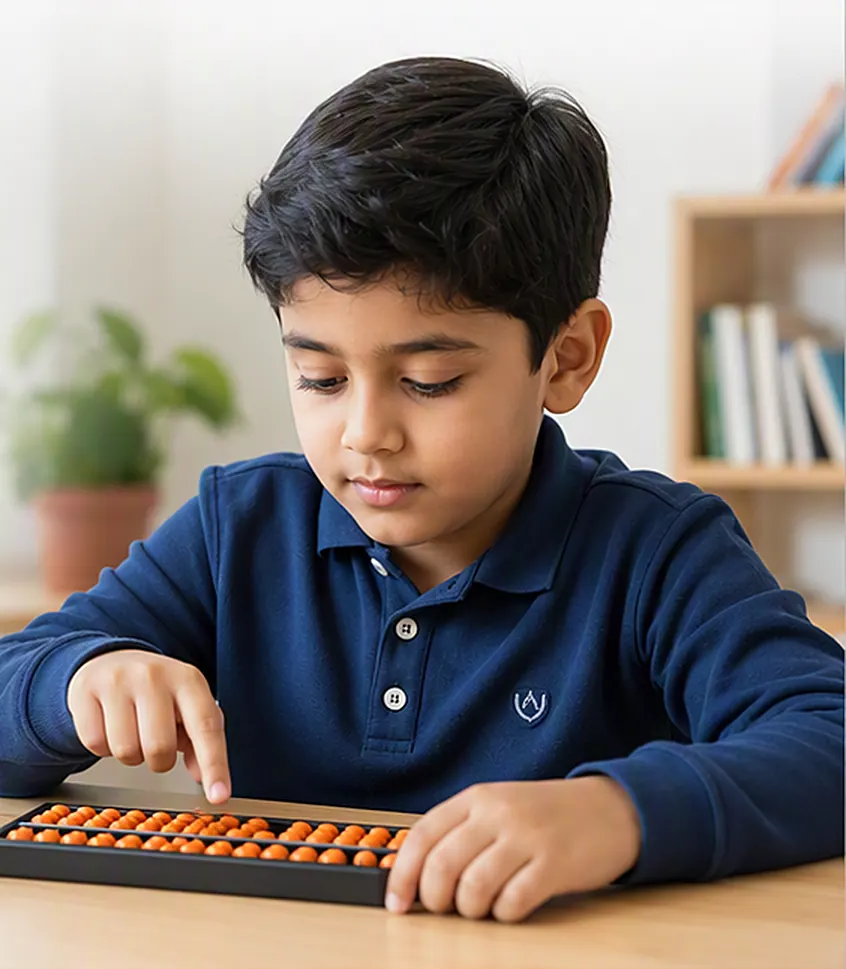
Most children meet the abacus between the ages of 5 and 7. At first it's simply beads to push. After a few months the beads start to mean ones, tens and hundreds, and sums that once needed fingers get done on the rods.
- Short daily practice of 10 to 15 minutes usually beats one long weekly session.
- Readiness matters more than age: counting to 20 and sitting for a short lesson.
- You can start the early levels together at home. A class is optional, not required.
Common questions
Is abacus useful or not?
It can be, mainly for arithmetic: place value and fast, accurate sums, after regular practice over months and years. It doesn't raise IQ or replace school maths. Read the honest answer.
What is the right age to start abacus?
Most children start between 5 and 7. Age matters less than readiness: counting to 20, recognising numbers and sitting for a short lesson. More on the right age.
Can I teach abacus at home?
Yes, at least for the early levels. Learn the bead values and the friend rules a few minutes ahead of your child, then practise together for 10 to 15 minutes a day. Try the 4-week home plan.
Does abacus improve maths marks at school?
It may help with fast, accurate arithmetic. School maths also covers geometry, word problems and reasoning, which abacus doesn't teach directly. Abacus vs school maths.
Is abacus the same as Vedic Maths?
No. Abacus uses a bead tool and later a mental picture of it. Vedic Maths is a set of written and mental shortcuts. Compare the two.