Short daily sessions work best — about 10 to 15 minutes. Practise by operation, use quick sums and worksheets, and move up only when sums of the current type are mostly right.
An on-screen abacus, a bead-setting game and quick sums, with a simple home routine. Nothing to install and no sign-up.
A 7-rod soroban to play with. Tap beads, type a number to show it, or add and subtract numbers and watch the beads change. The last few steps are listed underneath.
0
Set the number
Ten rounds. Set the beads to match the number, then press Check.
Round1/10Score0Streak0
Set this number
0
0
Practice by operation (+ − × ÷)
Ten questions at a time. Work each one on the abacus or on paper, then check. A wrong answer shows the right one and how to check it. Only answers right the first time count towards your learning journey.
Start at Level 1 of each operation. Move up after scoring 8 or more twice in a row. These are the same 5 levels as the worksheets for one operation and the game's operation choice.
New to an operation? Each guide has worked examples and guided sums: + and −, × and ÷.
Quick sums: mixed levels
Ten mixed questions whose type changes with the level. For one operation at a time, use Practice by operation below.
Do each sum on your abacus first, then write the answer.
3 + 4 − 2 =
5 + 2 − 4 =
6 − 3 + 5 =
8 − 5 + 4 =
4 + 5 − 6 + 3 =
9 − 4 + 2 − 5 =
7 + 2 − 6 + 4 =
2 + 6 − 3 + 4 =
23 + 15 − 12 =
45 − 21 + 34 =
56 + 12 − 37 =
38 + 24 − 19 =
64 − 28 + 15 =
72 − 45 + 33 =
47 + 36 − 58 =
85 − 39 + 26 =
19 + 48 − 27 + 13 =
63 − 25 + 41 − 37 =
54 + 29 − 36 − 18 =
91 − 47 + 28 − 35 =
For parents: answer key
Answer Key — Lesson X1 (for parents)
3 + 4 − 2 = 5
5 + 2 − 4 = 3
6 − 3 + 5 = 8
8 − 5 + 4 = 7
4 + 5 − 6 + 3 = 6
9 − 4 + 2 − 5 = 2
7 + 2 − 6 + 4 = 7
2 + 6 − 3 + 4 = 9
23 + 15 − 12 = 26
45 − 21 + 34 = 58
56 + 12 − 37 = 31
38 + 24 − 19 = 43
64 − 28 + 15 = 51
72 − 45 + 33 = 60
47 + 36 − 58 = 25
85 − 39 + 26 = 72
19 + 48 − 27 + 13 = 53
63 − 25 + 41 − 37 = 42
54 + 29 − 36 − 18 = 29
91 − 47 + 28 − 35 = 37
Ready for the next lesson when: mixed rows are right and every sign is noticed, and 8 or more out of 10 are right in the practice box or on the worksheet.
Lesson X2 · Mental Maths with Bead Pictures
Today's goal: Picture the abacus beads in your head and do small + and − sums without touching it — then check on the real abacus.
Parents: how to teach
Do a sum on the abacus first, then close your eyes and picture the same beads moving.
Start with tiny sums like 2 + 3 and 7 − 2, said out loud.
Let your child move a finger in the air as if moving beads — it helps the picture.
Check every answer on the real abacus.
Five minutes a day is enough; stop before it feels hard.
Do each sum on your abacus first, then write the answer.
2 + 3 =
4 + 1 =
6 + 2 =
7 − 2 =
9 − 5 =
3 + 5 =
8 − 3 =
2 + 2 + 4 =
5 + 3 − 1 =
9 − 4 − 3 =
3 + 4 =
6 − 2 =
4 + 4 + 1 =
7 − 4 + 2 =
6 + 3 − 5 + 4 =
7 + 5 =
9 + 6 =
13 − 5 =
15 − 8 =
12 + 7 − 4 =
For parents: answer key
Answer Key — Lesson X2 (for parents)
2 + 3 = 5
4 + 1 = 5
6 + 2 = 8
7 − 2 = 5
9 − 5 = 4
3 + 5 = 8
8 − 3 = 5
2 + 2 + 4 = 8
5 + 3 − 1 = 7
9 − 4 − 3 = 2
3 + 4 = 7
6 − 2 = 4
4 + 4 + 1 = 9
7 − 4 + 2 = 5
6 + 3 − 5 + 4 = 8
7 + 5 = 12
9 + 6 = 15
13 − 5 = 8
15 − 8 = 7
12 + 7 − 4 = 15
Ready for the next lesson when: small sums are right in the head and match the abacus when checked, and 8 or more out of 10 are right in the practice box or on the worksheet.
A simple home routine
Time
What to do
2 min
Warm up: set and clear 5 numbers
5–8 min
One quick-sums set or half a worksheet at the current level
3 min
Review mistakes: redo each wrong sum slowly on the abacus
1 min
Finish with something easy so the session ends well
Short daily sessions tend to work better than one long session a week. Stop before your child gets tired.
Common mistakes
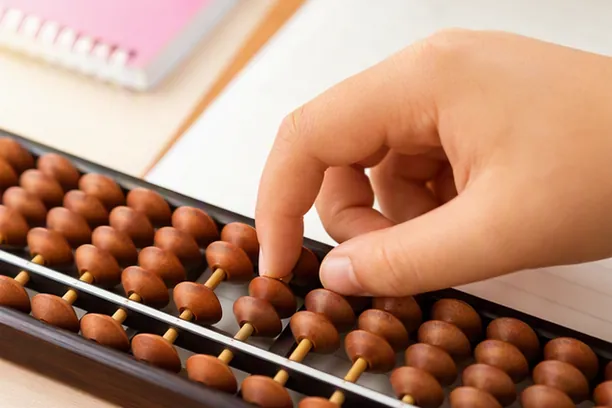
Using the wrong finger. Thumb pushes earth beads up; index finger does everything else.
Not clearing properly. Start each sum with every bead away from the beam.
Guessing the friend. Say the rule out loud ("plus 5 minus 4") until it's automatic.
Rushing to speed. Accuracy first; speed comes with repetition.
Buying an abacus
Check
Why
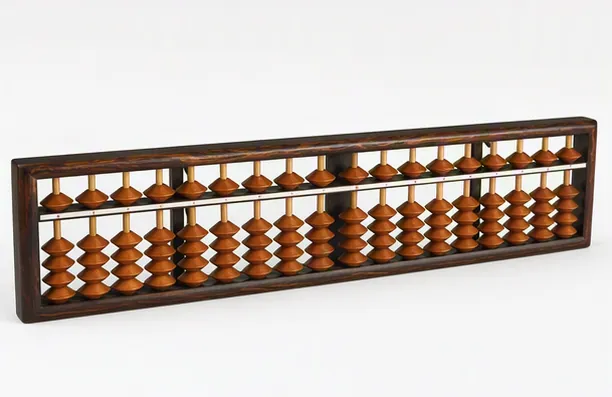
Soroban layout (1 above, 4 below)
Matches what most guides and classes use
At least 13 rods
Enough for multi-digit sums, × and ÷
Unit dots on the beam
Makes reading place value easier
Beads that move smoothly but don't slide on their own
Stray beads cause errors
Price around ₹150–₹500
Student sorobans don't need to cost more
For parents and teachers
On-screen abacus: tap beads, or type a number and press Show on abacus. To add or subtract, type a number and press + or −; the last few steps are listed underneath.
Set the number: your child moves the beads to make the number shown and presses Check. Good for beginners who are learning to read and set numbers.
Practice by operation: start each operation at Level 1; move up after scoring 8 out of 10 twice in a row.
In a classroom: show the on-screen abacus on a projector, have children set the same number on their own abacus, then let one child come up and check.
What your child can do
Where to start
Counts to 10; bead values are new
On-screen abacus and Set the number (1 rod)
Shows numbers from 0 to 99
+ Level 1 and − Level 1
Knows small and big friends
+ Level 3, − Level 3
Knows the 2 to 5 times tables
× Level 1
Ages are only a rough guide; start from what your child can already do.
Link to this tool
You're welcome to link to this page from a school website, newsletter or parents' group. Please link to it rather than copying the content. Tap the text below to select it, then copy:
AbacusBrainy: free online abacus practice (on-screen soroban and practice tools). https://abacusbrainy.com/abacus-practice/
Download this lesson's worksheet
Each lesson has its own printable worksheet with an answer key.